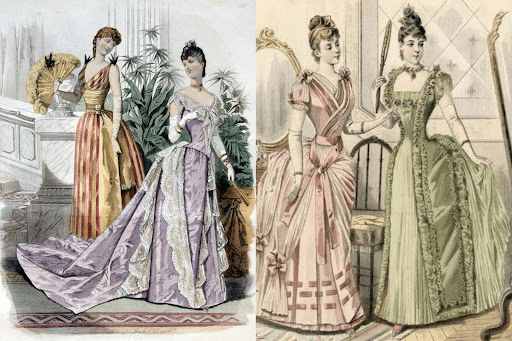
Victorian women were frequently pressured by society to stick to strict beauty standards, and a strange practice of purposely contracting diseases—particularly tuberculosis—to seem fashionable—began to arise. Women intentionally exposed themselves to the bacterium because they wanted a pale, dreamy complexion. They thought the symptoms, like a chronic cough and weight loss, would make them look more appealing.
From the Victorian era’s trend of intentionally contracting diseases for a fashionable appearance to the romanticized allure of Marie Duplessis’s tragic life and death in 19th-century France, the historical narrative underscores the theme of women contending with societal beauty ideals. Marie Duplessis, a well-known figure in 19th-century France, embodied the idealized appeal of tragedy and early death. Her name was Alphonsine Rose Plessis, and she rose to fame as a courtesan, enticing Paris’s elite with her charm and elegance.
Artists and writers were heavily influenced by her death; Alexandre Dumas fils, in especially, highlighted her in his novel “La Dame aux Camélias.” The work helped spread the romanticized account of Duplessis’s life and death when it was eventually turned into Giuseppe Verdi’s opera “La Traviata.”
Throughout history, women have continuously faced the pressure to meet constantly evolving and often unrealistic beauty standards. The story of ongoing expectations that shape women’s self-perception continues, from corsets to modern ideals. The constant pressure to be attractive is a sad reminder of the battle for honesty and acceptance of self. It also raises important issues for discussion, such as challenging unreasonable standards and valuing different forms of beauty.
Written by Begüm Edited by İklim


Leave a Reply