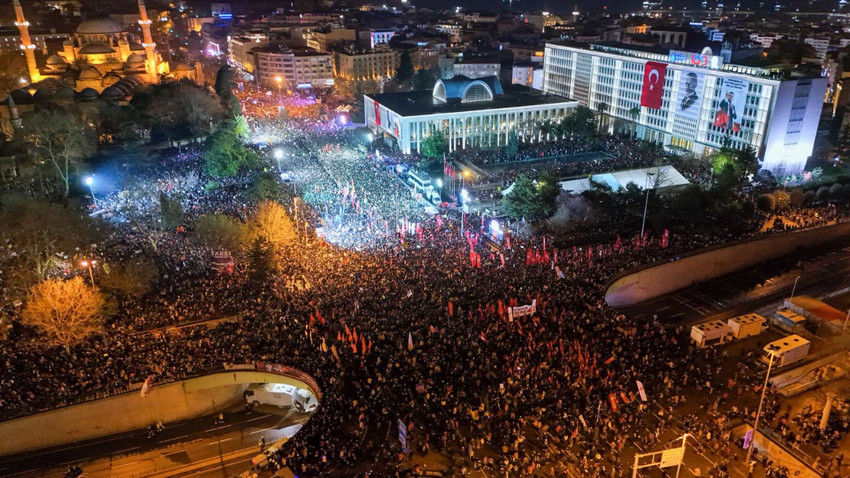
Understanding the Rise of Protests in Turkey
Turkey is a country with a rich history of political movements and activism. From the 1980s’ military coups to the Gezi Park protests in 2013, protests have long been part of the nation’s fabric. In recent times, however, there has been a noticeable uptick in the frequency and intensity of protests, driven by both domestic and international factors. These protests are often fueled by frustrations over economic hardship, perceived erosion of democratic values, or responses to controversial government policies.
One of the key elements that differentiate current protests from those in the past is the shift in the underlying causes. They are no longer limited to political ideologies but are driven by a broader range of issues that affect everyday life for citizens.
Key Reasons Behind the Recent Protests
- Economic Challenges: One of the most significant drivers of recent protests has been the country’s economic crisis. Inflation has skyrocketed, the Turkish lira has experienced a dramatic depreciation, and unemployment rates have risen. Many citizens are struggling to meet basic needs as living costs climb. Young people, in particular, are frustrated by the lack of job opportunities and the shrinking middle class. In response to these economic difficulties, protests have become a way for people to demand better economic policies and greater social protections.
- Government Policies and Authoritarianism: President Recep Tayyip Erdoğan’s government has faced increasing scrutiny over its growing authoritarian tendencies. Critics argue that the government is curbing freedom of speech, limiting media freedoms, and silencing political opposition. Protests have erupted in response to controversial decisions, such as the withdrawal from the Istanbul Convention (a treaty aimed at protecting women from violence), the erosion of judicial independence, and the repression of dissenting voices.
- Environmental Concerns: Turkey has also seen a growing number of environmental protests. One of the most prominent examples of this was the 2013 Gezi Park protests, which started as a movement against the government’s plans to demolish a park in Istanbul and replace it with a shopping mall. Since then, environmental activism has gained momentum, with many Turks taking to the streets to voice their concerns over urbanization, pollution, and the destruction of natural spaces.
- Human Rights and Personal Freedoms: Protests have also focused on issues related to human rights and personal freedoms. There have been widespread demonstrations in response to police brutality, gender inequality, restrictions on LGBTQ+ rights, and the treatment of minorities. The oppression of free expression and public dissent has been a key issue, with many protesting against laws that restrict civil liberties and freedom of assembly.
Recent Major Protests in Turkey
- The Women’s March and Gender Equality Protests: One of the most powerful protest movements in Turkey has been led by women advocating for gender equality and protection from violence. Protests have intensified following the government’s decision to withdraw from the Istanbul Convention, which is designed to protect women against violence. Women in Turkey have organized massive marches, calling for better protection, justice for victims of violence, and stronger legal frameworks.
- Protests Against Economic Conditions: The economic crisis has pushed many Turks to the streets. Rising inflation and unemployment, alongside government austerity measures, have resulted in demonstrations from various sectors, including teachers, healthcare workers, and young graduates. People are demanding better economic policies, higher wages, and improved living standards.
- Environmental and Urbanization Protests: The protests against urban development projects continue to spark major debates. Citizens have taken to the streets in cities like Istanbul, Antalya, and İzmir to oppose the destruction of natural spaces for development. Many see these protests as a fight to preserve Turkey’s natural beauty and to ensure that urbanization does not come at the cost of the environment.
Government’s Response to Protests
The Turkish government’s response to protests has been controversial. While the state has stated that it respects the right to peaceful assembly, protests are often met with heavy police presence. In some cases, there have been reports of police using force to disperse crowds, and protesters have been arrested for participating in demonstrations. The government has also made efforts to discredit protests by framing them as attempts to destabilize the country or incite unrest.
This approach has led to concerns about the state of democracy in Turkey. Critics argue that the government’s heavy-handed tactics are not only undermining political freedoms but are also contributing to an atmosphere of fear and mistrust.
The Future of Protests in Turkey
As protests continue across Turkey, it’s clear that the country is at a crossroads. On one hand, the protests are a sign of a society that is becoming more politically active, more engaged in its democratic processes, and more willing to demand accountability from its leaders. On the other hand, the response from the government suggests that political freedoms may continue to be curtailed as authorities move to control dissent.
In the coming years, it will be interesting to see how Turkey’s political landscape evolves. Will the protests lead to meaningful reforms, or will the government clamp down further on freedoms? One thing is certain: the protests in Turkey are not just about today’s issues; they are about the future of the country and the direction in which it is heading.

 Yeni Yol News
Leave a comment