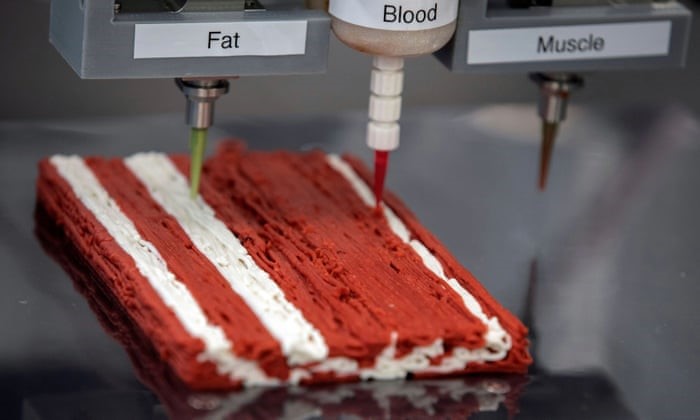
Imagine a future in which meat is printed using a 3D printer— – it’s no longer science fiction. The Israeli company Redefine Meat has developed a method of using a 3D printer to produce plant-based meat that tastes like beef or lamb. This meat alternative is made from ingredients such as soya, pea protein, chickpeas, beetroot, coconut oil and yeast, all of which are intended to imitate the flavour and texture of conventional meat.
Redefine Meat has already started selling this plant-based 3D-printed meat in restaurants in Europe. Other companies in the United States and Spain are also using 3D printers to produce meat alternatives. Demand for these products is expected to increase in the coming years due to rising meat prices and the desire for more sustainable options for animals and the environment.
What is artificial meat?
Artificial meat, also known as cultured meat or cell-based meat, is produced by harvesting stem cells from live animals in a laboratory environment. Cells from animals such as cattle, goats, pigs or chickens are combined with a solution of glucose, vitamins, amino acids and minerals. This mixture is then cultivated in bioreactors and forms muscle tissue that resembles meat.
While this method is not yet commercially viable and faces various challenges, such as public perception, it holds great promise for the future of food technology. Could we soon see 3D-printed artificial meat on the menu in Turkey? With advances in technology and consumer attitudes towards sustainable alternatives, this possibility seems increasingly likely.
 Yeni Yol News
Leave a comment