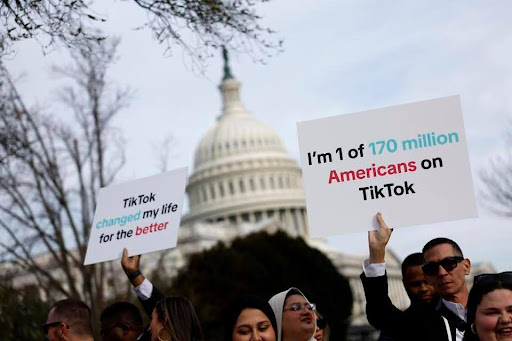
WASHINGTON, DC – MARCH 13: Participants hold signs in support of TikTok outside the U.S. Capitol … [+]
GETTY IMAGES
In a surprising turn of events, the Republican majority in the House of Representatives has sided with the Biden administration on a controversial issue: banning the social media app TikTok. The move has sparked outrage and concern among many, as it represents what some are calling the most far-reaching act of censorship in the history of the United States.
Critics argue that this ban is an attack on the fundamental right of American citizens to obtain information from any source. Despite claims of protecting national security, many see it as a thinly veiled attempt to stifle expression and control the flow of information.
The ban is justified on the grounds of defence against a foreign adversary, echoing similar justifications from the past. However, sceptics question the validity of these claims and point out that the Chinese government does not directly control TikTok. The ban also raises concerns about the precedent it sets for future state interference in freedom of speech and trade.
Furthermore, the ban ignores more pressing national security issues, such as preventing foreign interference in critical infrastructure and securing the country’s economy from manipulation. Instead of targeting social media platforms, critics say the government should focus on more effective measures to address legitimate security concerns.
The ban also raises questions about the role of ideology in shaping government policy. Some believe that the push to ban TikTok is driven by ideological motives rather than genuine concerns about national security. This ideological battle threatens to undermine the principles of free speech and democracy that the United States stands for.

The debate over TikTok is a stark reminder of the delicate balance between security and liberty in a democracy. While national security is important, it should not come at the expense of basic civil liberties. Banning TikTok sets a dangerous precedent that could have far-reaching consequences for freedom of expression and democracy in the United States.
 Yeni Yol News
Leave a comment