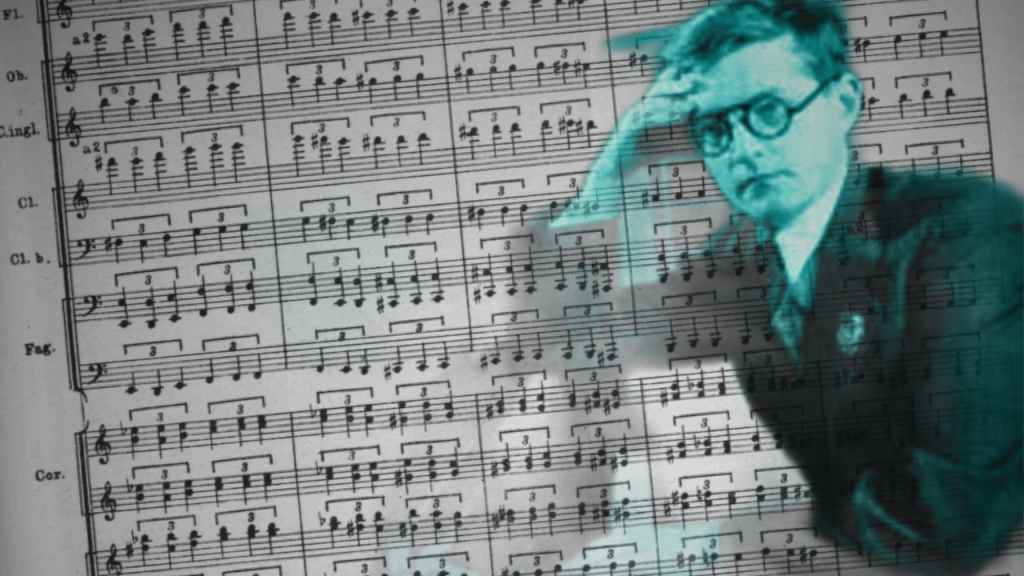
Dmitri Dmitriyevich Shostakovich, a known Russian composer (1906–1975), was mostly known for his symphonies, chamber music, and operas. He was born in St. Petersburg, Russia. He showed musical talent at an early age. His music often reflected the social tensions of his time. Despite facing observation and censorship under Stalin’s dictatorship, he remained a figure in classical music in the 20th century. Today, his works remain relevant and are still played all over the globe.
The title of the symphony refers to “Bloody Sunday,” a massacre that occurred in St. Petersburg in 1905 where peaceful protesters were mercilessly murdered, which led to a revolution. Composed in 1957, this symphony, with its four movements, is about an hour long. The symphony beautifully and horrifyingly captures the historical importance of the Bloody Sunday Massacre.
Movements:
1st, The Palace Square (Adagio): This movement sets a calm mood. Occasional folk tunes and open chords interwoven with one another like far-off noises floating through calm and still winter air.
2nd, the 9th of January (Allegro): Bloody Sunday occurs in this movement. The movement starts with music gathering energy, depicting workers coming together and marching to the Winter Palace. The crowd gathered across the line of soldiers. An open-fire rifle (depicted with a snare drum) triggers a panic, and this panic goes on to the climax. After the horrifying climax of this movement, there is a big silence. Everybody is dead or wounded.
3rd Eternal Memory (Adagio): This movement starts very quietly. It is a mournful tribute to those who died, with melancholic, sorrowful, and harsh moments, and it ends like the start of the movement with very soft pizzicato notes on cello and contrabass.
4th Tocsin (Allegro non-troppo): Although the main point of the symphony isn’t the end, the symphony ends with this movement, “tocsin,” a name for a warning bell. This movement also starts very strongly with loud brass. Shostakovich quotes one song that foreshadows the 1917 Revolution. “Tremble, tyrants, as you mock us! Threaten us with jail and manacles! We are free in spirit, even if our bodies are not. Shame on you, you tyrants! Shame!” Shostakovich quotes the first and second movements using motives and melodies from those movements. And here comes the finale of the symphony. It was a grand ending with bells and a full orchestra.
After all, I highly recommend listening to this magnificent work and Shostakovich’s other works. I hope you learned something new today. Thanks for reading this article. Remember to enjoy classical music.
Written by Bora Çevik (Guest Writer)
 Yeni Yol News
Leave a comment