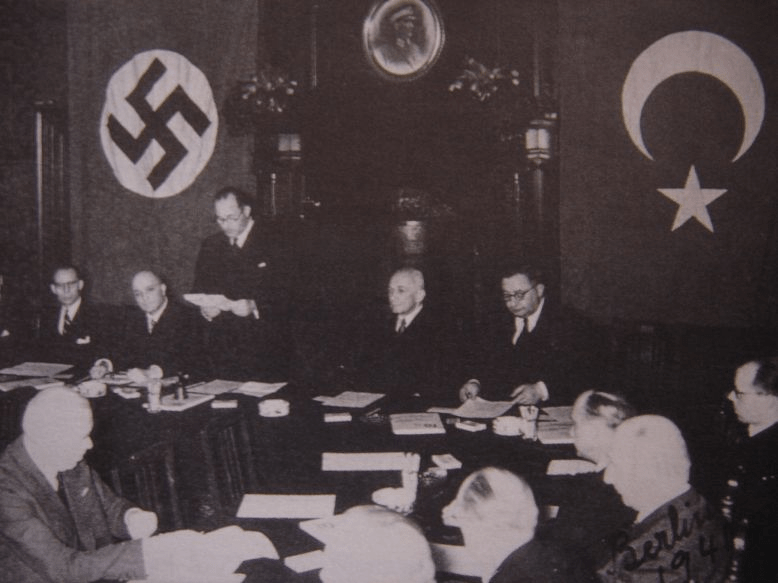
Turkey, under the leadership of President İsmet İnönü, tried to follow a policy of neutrality aimed at preserving its sovereignty and not being drawn into war. This neutrality policy resulted from the lessons Turkey learned from the difficulties of the First World War. Initially, Germany and Turkey maintained diplomatic relations, and there was some economic cooperation between the two countries.
The Molotov-Ribbentrop Pact, signed between Germany and the Soviet Union in 1939, indirectly benefited Turkey by reducing the threat of Soviet invasion. As the war progressed, Germany sought to strengthen its relations with Turkey to strengthen its southern front and gain access to potentially essential resources. The German government, led by Adolf Hitler, hoped to draw Turkey into the Axis Powers. However, Turkey acted carefully and continued its policy of not participating in World War II.
An important event in German-Turkish relations during World War II was the Turkish-German Friendship Treaty signed in 1941. This agreement aimed to strengthen economic and political ties between the two countries. However, Turkey did not join the Axis Powers or actively participate in military campaigns on Germany’s side. Turkey’s decision to remain neutral stemmed from its desire to avoid the devastating consequences of another world war.
Additionally, Turkish leaders were well aware that the course of the conflict was changing and wanted to avoid joining a potentially losing side. Despite efforts to maintain a neutral stance, Turkey faced pressure from both the Allies and the Axis Powers. While the Allies were trying to bring Turkey to their side, Germany was also seeking increased cooperation. İnönü masterfully managed these pressures and managed to keep Turkey neutral until the end of World War II.
As it became clear in the later stages of World War II that the Axis Powers were defeated, Turkey took steps to distance itself from Germany and join the victorious Allies. This diplomatic maneuver allowed Turkey to join post-war reconstruction efforts and become a member of the United Nations in 1945.
In summary, during World War II, German-Turkish relations were characterized by Turkey’s policy of neutrality, careful diplomatic maneuvers, and a focus on preserving its sovereignty. Despite some economic and diplomatic connections, Turkey resisted pressure from both sides not to actively participate in the war and eventually exited the war as a neutral country.
Written by Uygar Edited by İklim
 Yeni Yol News
Leave a comment