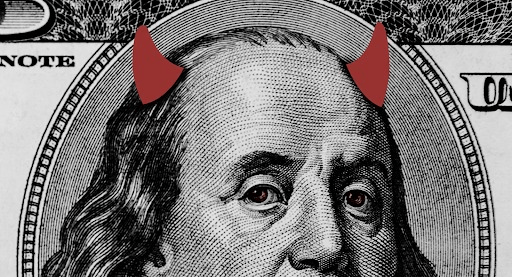
Stealing can be done in many ways, such as shoplifting, taking stuff you aren’t allowed to take from a hotel room, etc. The reason may be apparent: not being wealthy enough to pay for what you want to own. But why do researchers show that a more significant portion of the chart goes to the people with the money to buy what they steal?
On 6 April 2019, Andrew Francis Lippi III was arrested after returning the purchase he had just made, including two coffee makers ($153.99) and a Hamilton Beach ($54.99). But inside the returned Keurig box was a deflated basketball and a heavily used coffee machine. This can seem normal, just a man trying to steal some stuff, but the shocking part is that the suspect is rich. A week before his arrest, he paid $8m for an island in the Florida Keys.
A federal lawyer stole $257.99 in cosmetics from a military store, later admitting multiple thefts. Eva Pena, a New York police officer earning $1.3 million a year, was suspended for allegedly stealing $359 in clothing from Macy’s, despite her salary and driving a white Mercedes to court for a not guilty plea.
There are tons of cases like this, but why? Why do rich people steal the stuff they can easily afford? Some theories have come up over the years by psychologists.
Psychologist Stanton E. Samenow is convinced wealthy people shoplift because, as he puts it: “Why buy it if you can steal it?”. Samenow recounts a case study of a patient he treated several years ago: “He had more than enough money to buy the item. He took it for the thrill of it, to outsmart the establishment. He enjoyed every aspect of shoplifting”.
Psychiatrist Jon Grant is quick to add that once the adrenaline rush subsides, a darker side of this compulsion manifests itself. “I see shoplifting as an addiction,” he says. “The people I treat hate the fact that they steal. They enjoy the thrill but almost instantly beat themselves up for the behavior. They have lots of guilt and frequently think about and attempt suicide because of their behavior.”.
Social hierarchies is an established field of psychology that focuses on the effects of wealth, power, and privilege. The study results in this area are remarkably consistent: the rich tend to be unethical and are more likely to cheat and steal than the poor are. There’s the grim and troubling “candy experiment,” where researchers observed wealthy people remove twice as much candy from a jar that had been earmarked for children than people low-income.
Experiments have also shown that wealthy people are more likely to cheat on their romantic partners. One theory to explain this contrast in behavior is that low-income people are less likely to cheat and steal because they are more invested in their communities and fear being publicly humiliated. Another factor that may apply is that the poor have a heightened fear of authority figures, and the rich do not.
We may not be certain about the reason or the psychology behind the actions, but one thing we know is that rich people steal, break the laws, and cheat more than poor people.
Source:
Written by Tuna Edited by İklim
 Yeni Yol News
Leave a comment